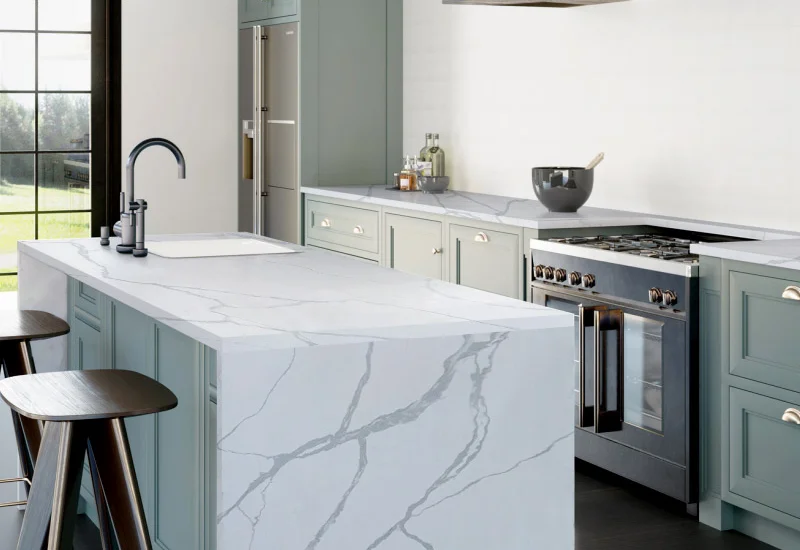
Dekton Worktops: Cleaning and Manufacturing

Dekton Care Example

How to Clean Dekton

Dekton is very durable and requires very maintenance. With the proper cleaning, it will look new for years:

  • Overall Cleaning: Clean daily with a soft cloth and mild dish soap mixed with water. Avoid using steel wool and alkaline sponge scour pads, as well as chemical and abrasive cleaners.
  • Removing Stains: For stubborn stains, use a gentle cleaner to lift the markings from the surface without scratching. For example, a baking soda and water paste may be used for tough stains.
  • Heat: While Dekton is heat resistant, it is advisable to place trivets and heat mats underneath hot pots and pans to avoid thermal shock.
  • Scratches: While Dekton is highly resistant to scratches, it’s best to use cutting boards when chopping to protect the surface and preserve its appearance.
  • Chemical: Never use bleach, oven cleaners or other chemicals that are abrasive or acidic as it will cause long term damage.

How Dekton is Manufactured

Dekton is manufactured using a revolutionary process that combines the raw materials used in glass, porcelain, and quartz surfaces. There are many steps, but below is a summary:
  • Raw Material Selection: Quality glass, quartz, and porcelain are screened and batched.
  • Particles Entering the Sintering Process: The glass, quartz and porcelain mixture is put under high pressure to compact the materials into a dense and ultra-compact surface.
  • Fired in a High-Temperature Kiln: The material is then fired in a kiln at temperatures greater than 1,200 °C to fuse the particles together to form a solid, non-porous slab.
  • Cooling and Finishing: Slabs are cooled gradually to prevent thermal shock, then polished or textured to achieve the desired look.
  • Quality Control: Each slab is rigorously tested to ensure it meets Dekton’s durability, resistance, and aesthetic standards.
Dekton Manufacturing Example